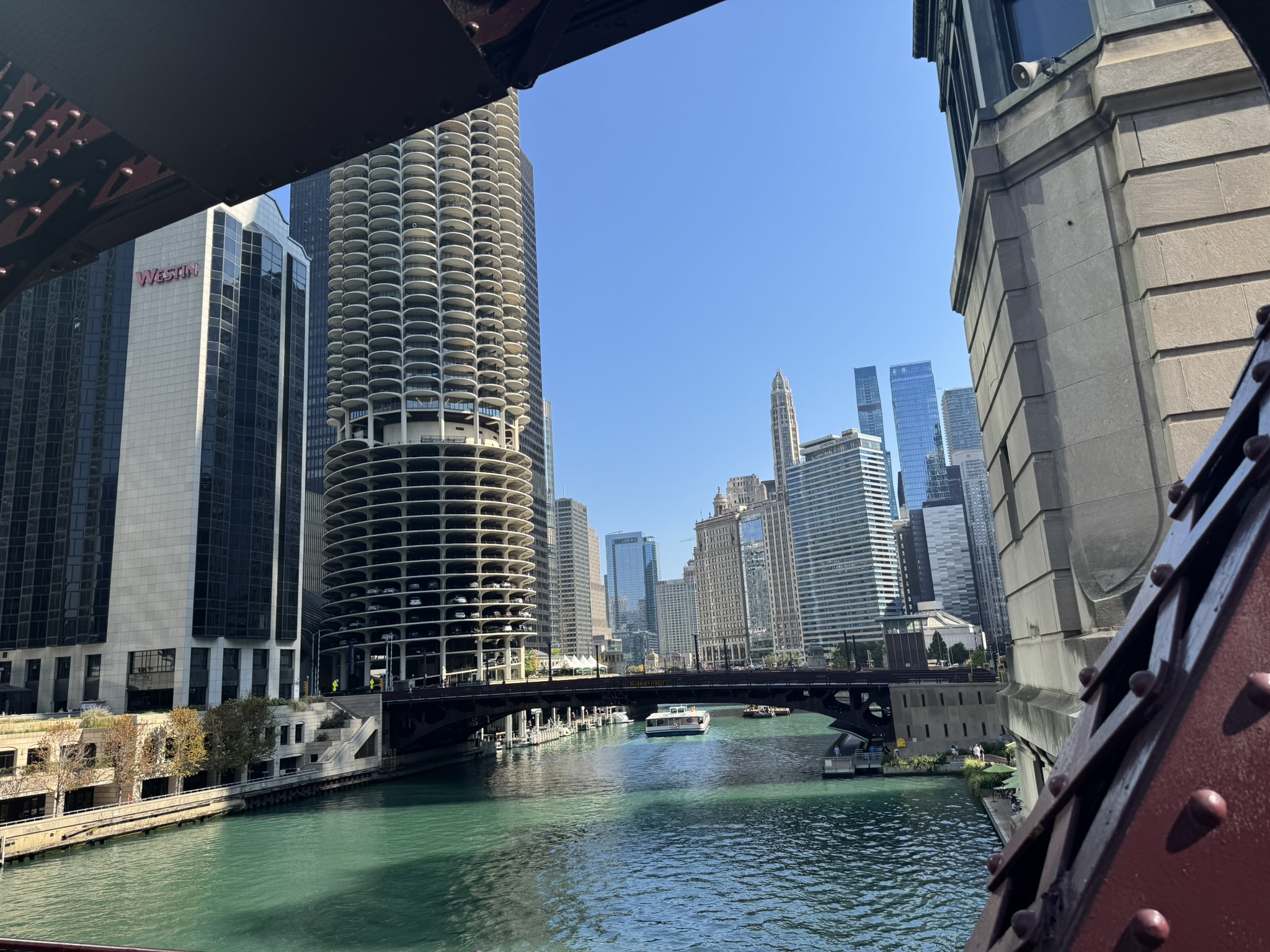
Later op de dag zal iemand door een microfoon schreeuwen dat dit de mooiste skyline ter wereld is. Nu horen we alleen een kalme stem in ons oortje en het gerommel van de bus over Michigan Avenue. Dit is Chicago in twee snelheden, en we hebben net besloten om beide te proberen.
De zon schijnt, vijfentwintig graden, koffie in onze hand terwijl we op de bovenverdieping van de Big Bus Chicago tour zitten. “Chicago, Chicago, I will show you around,” zingt een jazzy stem tussen de verhalen door, over staal, glas en wind, over een stad die zichzelf opnieuw uitvond. Vanaf de dubbeldekker zien we de architectuur in lagen: boven het verkeer, onder de tunnels waar vracht en afval verdwijnen. Alles in rechte lijnen. Die orde is niet toevallig.
Een stad die zichzelf heruitvond
Na de grote brand van 1871 moest Chicago zichzelf opnieuw opbouwen. In drie dagen verwoestte het vuur zeventienduizend gebouwen. Wat overbleef, was een speeltuin voor architecten als Daniel Burnham en Louis Sullivan, die plannen tekenden voor een stad die niet opnieuw zou afbranden. Staal verving hout, glas bracht licht binnen. Burnhams City Beautiful Movement gaf Chicago brede boulevards en ruimte voor parken, terwijl Sullivans credo form follows function veranderde hoe heel Amerika bouwde.
“Chicago is de plek waar de wolkenkrabber geboren werd,” zegt de gids, “en we zijn er nog steeds trots op.”
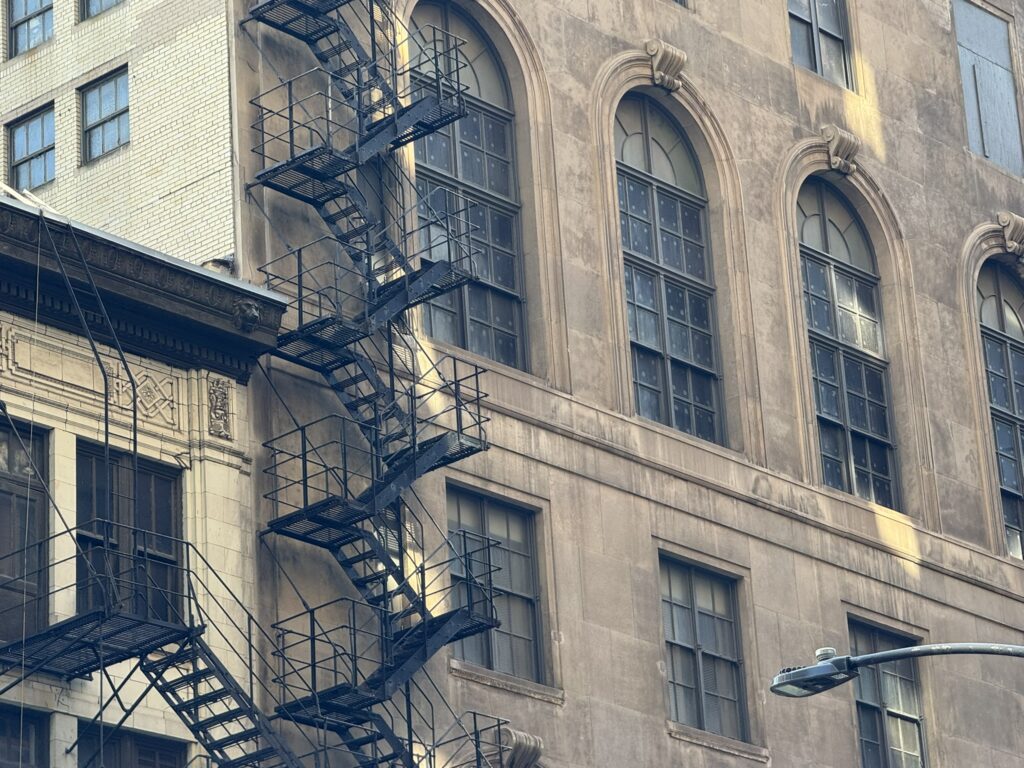
In dertig jaar groeide de stad uit tot een laboratorium van moderne architectuur. De bus rijdt door de Financial Canyon, een straat zo smal en hoog dat het licht nauwelijks de stoep raakt: klassieke gevels met ornamenten naast spiegelend glas, Chicago als een doorlopende bouwtentoonstelling. Zelfs de wind kreeg hier een rol. Het 340 meter hoge Aon Center heeft openingen bovenin waar luchtstromen van Lake Michigan doorheen kunnen waaien. Niet tegen de natuur bouwen, maar mét haar.
Van de weg naar het water
De bustour duurt ongeveer twee uur. We kunnen overal uitstappen, bij het Art Institute of Navy Pier, maar dat hoeft niet. Vanaf de bovenverdieping zien we al genoeg. Voor ons zitten twee toeristen die elk gebouw vastleggen, ook de parkeergarage.
“Chicago bouwt niet voor de eeuwigheid,” zegt de gids later op de boot. “We bouwen voor de volgende storm.”
’s Avonds stappen we over op het water. De Chicago Architecture River Cruise vertrekt vanaf de kade bij Michigan Avenue, en deze gids praat luider, schreeuwt bijna over de motor heen. Meer show dan les, maar de feiten kloppen wel. Hij wijst naar het IBM gebouw van Mies van der Rohe, less is more inderdaad, en naar Marina City, de maïskolven met parkeerlagen onderin. Hij vertelt hoe de rivier ooit zo vervuild was dat de stad haar loop omkeerde om het drinkwater te redden.
Het licht dat verandert op het water
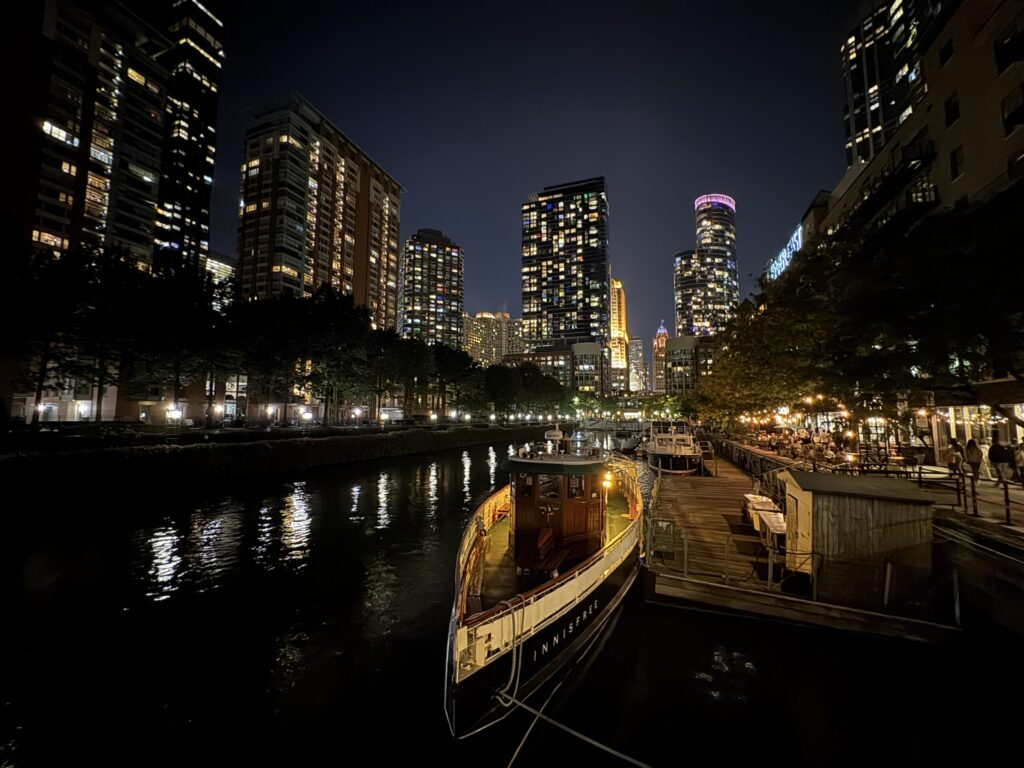
Langs de rivier zien we geschiedenis in staal: de gotische torens van The Rookery en de art-decoflanken van het Carbide en Carbon Building, ’s avonds prachtig verlicht. Aan de oevers verrijzen ook nieuwe duurzame torens, zoals Jeanne Gangs Aqua Tower die golvend meebeweegt met de wind, en de Riverwalk is opnieuw uitgevonden als publieke ruimte vol trappen, water en stadsleven.
Tegen zes uur verandert het licht. De zon zakt, ramen gloeien op, de Riverwalk vult zich met geroezemoes. Vanaf het water krijgt de skyline diepte en de stad lijkt even stil te vallen, al is dat gezichtsbedrog. We nemen afscheid van de gids, die grinnikend nog een laatste keer vraagt of dit niet de mooiste skyline ter wereld is. We glimlachen vriendelijk en stappen van de boot, terwijl aan de kade een ober net de laatste terrasstoelen rechtzet voor de avond.
Later in the day, someone will shout through a microphone that this is the most beautiful skyline in the world. Right now we only hear a calm voice in our earpiece and the rumble of the bus along Michigan Avenue. This is Chicago at two speeds, and we have just decided to try both.
The sun is out, seventy seven degrees, coffee in hand as we sit on the top deck of the Big Bus Chicago tour. “Chicago, Chicago, I will show you around,” sings a jazzy voice between the stories, about steel, glass and wind, about a city that reinvented itself. From the double decker we see the architecture in layers: above the traffic, below the tunnels where freight and waste disappear. Everything in straight lines. That order is not an accident.
A city that rebuilt itself
After the great fire of 1871, Chicago had to reinvent itself from the ground up. In three days the fire destroyed seventeen thousand buildings. What remained was a playground for architects like Daniel Burnham and Louis Sullivan, who drew up plans for a city that would never burn down the same way twice. Steel replaced wood, glass let in light. Burnham’s City Beautiful Movement gave Chicago wide boulevards and room for parks, while Sullivan’s credo form follows function changed how all of America built.
“Chicago is where the skyscraper was born,” the guide says, “and we are still proud of it.”
In thirty years the city grew into a laboratory of modern architecture. The bus rolls through the Financial Canyon, a street so narrow and tall that light barely reaches the sidewalk: classical facades with ornaments next to mirrored glass, Chicago as a continuous building exhibition. Even the wind got a role here. The eleven hundred foot Aon Center has openings near the top that let air currents from Lake Michigan pass through. Not building against nature, but with it.
From the road to the water
The bus tour runs about two hours. We can hop off anywhere, at the Art Institute or Navy Pier, but we do not have to. From the top deck we already see enough. In front of us sit two tourists photographing every building, including the parking garage.
“Chicago does not build for eternity,” the guide says later on the boat. “We build for the next storm.”
In the evening we switch to the water. The Chicago Architecture River Cruise departs from the dock near Michigan Avenue, and this guide talks louder, nearly shouting over the engine. More performance than lecture, but the facts hold up. He points to the IBM Building by Mies van der Rohe, less is more indeed, and to Marina City, the corncob towers with parking levels tucked at the base. He explains how the river was once so polluted that the city reversed its flow to save the drinking water.
The light that shifts on the water
Along the river we see history in steel: the gothic towers of The Rookery and the art deco flanks of the Carbide and Carbon Building, beautifully lit at night. New sustainable towers rise along the banks too, like Jeanne Gang’s Aqua Tower rippling with the wind, and the Riverwalk has been reinvented as public space full of steps, water and city life.
Around six the light shifts. The sun drops, windows glow, the Riverwalk fills with chatter. From the water the skyline gains depth, and the city seems to go still for a moment, though that is an illusion. We say goodbye to the guide, who chuckles and asks one last time if this is not the most beautiful skyline in the world. We smile politely and step off the boat, while at the dock a waiter straightens the last of the terrace chairs for the evening ahead.
Chicago per bus en boot bezoeken, dit moet je weten
De Big Bus Chicago is de bekende dubbeldekker hop-on hop-off tour. Het startpunt ligt aan de Riverwalk, tussen Michigan Avenue en Wabash. De 24-uurs Discover-ticket kost 49 dollar voor volwassenen (24 dollar voor kinderen 3-12), de 48-uurs Essential 59 dollar en de 72-uurs Explore 69 dollar. Bussen vertrekken elke 30 tot 45 minuten van 10.00 tot 17.00. De Red Loop duurt twee uur en telt elf haltes langs Millennium Park, Field Museum, Willis Tower en Magnificent Mile.
De architectuurcruise op de rivier is een klassieker. De CAC-cruise op Chicago’s First Lady duurt 90 minuten, kost 57 dollar en vertrekt bij het Michigan Avenue Bridge in het seizoen (eind maart tot half november). Wendella heeft een 90-minutentour voor 44 dollar en vaart het hele jaar door (gesloten op eerste kerstdag). Shoreline vertrekt vanaf Navy Pier of Willis Tower Dock voor 46 dollar. Combineer de Big Bus met de Shoreline-cruise voor 99 dollar via bigbustours.com. Boek een ochtendcruise voor de warmste zon en de rustigste ligging.
Vaakgestelde vragen over Chicago bus en boot
Wat kost de Big Bus Chicago?
24-uurs Discover: 49 dollar volwassene, 24 dollar kind. 48-uurs Essential: 59 dollar. 72-uurs Explore: 69 dollar. Sunset Tour los: 39 dollar.
Waar vertrekt de Big Bus?
Vanaf de Chicago Riverwalk, ter hoogte van Michigan Avenue en Wabash. Eerste bus 10.00, laatste bus 17.00. Frequentie 30 tot 45 minuten.
Welke architectuurcruise is de beste?
De CAC River Cruise op Chicago’s First Lady (57 dollar, 90 minuten) heeft docenten met een maandenlange opleiding. Wendella (44 dollar) is een goede jaarrond-optie.
Vaart de architectuurcruise ook in de winter?
Ja, alleen Wendella vaart jaarrond. De CAC-cruise loopt eind maart tot half november. Wendella heeft een verwarmde binnencabine voor koude dagen.
Waar vertrekken de cruises?
CAC en Wendella vanaf de Riverwalk aan Michigan Avenue (zuidoosthoek Wrigley Building). Shoreline vertrekt vanaf Navy Pier of Willis Tower Dock.
Kun je bus en boot combineren?
Ja. Big Bus verkoopt de combi met de Shoreline architectuur cruise voor 99 dollar (48 uur). Ook de “Chicago From Every Angle” met bus, 360 Chicago en cruise is er voor 104 dollar.
Over Elle
Elle Verbeek is reisjournalist en purser bij KLM. Ze schrijft columns en reisverhalen, deels voor eigen platform, deels voor Nederlandse magazines. Op Ellevie Travels deelt ze reisreportages van de bestemmingen waar ze naartoe vliegt of waar ze zelf naartoe reist.
Meer uit Chicago
Visiting Chicago by bus and boat: what to know
Big Bus Chicago is the well-known double-decker hop-on hop-off tour. The starting point is at the Riverwalk between Michigan Avenue and Wabash. The 24-hour Discover ticket costs 49 dollars for adults and 24 dollars for children (3-12), the 48-hour Essential runs 59 dollars, and the 72-hour Explore 69 dollars. Buses depart every 30 to 45 minutes from 10:00 AM to 5:00 PM. The Red Loop lasts two hours and covers eleven stops along Millennium Park, the Field Museum, Willis Tower, and the Magnificent Mile.
The architecture cruise on the river is a classic. The CAC cruise on Chicago’s First Lady runs 90 minutes, costs 57 dollars, and departs from Michigan Avenue Bridge in season (late March to mid-November). Wendella has a 90-minute tour for 44 dollars and runs year-round (closed Christmas Day only). Shoreline departs from Navy Pier or the Willis Tower Dock for 46 dollars. Combine the Big Bus with the Shoreline cruise for 99 dollars through bigbustours.com. Book a morning cruise for the warmest sun and the calmest water.
Frequently asked questions about Chicago bus and boat
What does the Big Bus Chicago cost?
24-hour Discover: 49 dollars adult, 24 dollars child. 48-hour Essential: 59 dollars. 72-hour Explore: 69 dollars. Sunset Tour alone: 39 dollars.
Where does the Big Bus depart?
From the Chicago Riverwalk near Michigan Avenue and Wabash. First bus 10:00 AM, last bus 5:00 PM. Frequency every 30 to 45 minutes.
Which architecture cruise is best?
The CAC River Cruise on Chicago’s First Lady (57 dollars, 90 minutes) has docents with months of training. Wendella (44 dollars) is a solid year-round option.
Do architecture cruises run in winter?
Yes, but only Wendella runs year-round. The CAC cruise runs late March to mid-November. Wendella has a heated indoor cabin for cold days.
Where do the cruises depart?
CAC and Wendella from the Riverwalk at Michigan Avenue (southeast corner of the Wrigley Building). Shoreline departs from Navy Pier or the Willis Tower Dock.
Can you combine bus and boat?
Yes. Big Bus sells the combo with the Shoreline architecture cruise for 99 dollars (48 hours), and the “Chicago From Every Angle” combo with bus, 360 Chicago, and cruise for 104 dollars.
About Elle
Elle Verbeek is a travel journalist and KLM purser. She writes columns and travel stories, partly for her own platform, partly for Dutch magazines. On Ellevie Travels she shares reportage from the destinations she flies to or travels to on her own.
More from Chicago
Praktische tips uit dit verhaal Practical tips from this story
-
Restaurant · comfort food · Chicago The Dearborn — comfort food vernoemd naar een verdwenen fort — French onion soup, cheddar-appel sandwiches en fish and chips. Genoemd naar Fort Dearborn, dat ooit op deze plek stond.
Restaurant · comfort food · Chicago The Dearborn — comfort food named after a vanished fort — French onion soup, cheddar-apple sandwiches and fish and chips. Named after Fort Dearborn, which once stood on this site.
-
Bluesclub Kingston Mines — Al meer dan vijftig jaar dé bluesclub van de stad, met twee podia zodat het geluid nooit stopt. Ruw en echt, kleine ruimte, artiesten binnen handbereik. kingstonmines.com
Blues club Kingston Mines — For over fifty years the city's blues club, with two stages so the sound never stops. Raw and authentic, small room, artists within arm's reach. kingstonmines.com
-
Coffeeshop · verborgen plek · Chicago Hero Coffee Bar — verstopt in een steegje — Een gezellige, verborgen koffiebar met heerlijke cappuccino's, in een steegje dat ooit een doorgang voor arbeiders was.
Coffee shop · hidden gem · Chicago Hero Coffee Bar — hidden in an alley — A cosy, hidden coffee bar with excellent cappuccinos, in an alley that once served as a passage for workers.
-
Bioscoop · art deco · Chicago The Music Box Theatre — filmhuis uit 1929 met art deco — Historisch filmhuis waar de tijd heeft stilgestaan. Art deco-interieur uit 1929.
Cinema · art deco · Chicago The Music Box Theatre — a 1929 cinema with art deco flair — A historic cinema where time seems to have stood still. Art deco interior from 1929.
-
Uitzichtpunt Skydeck Willis Tower — Als je toch al hoog boven de stad wilt hangen, hoort deze 103e verdieping erbij. The Ledge, een glazen kubus die uit de gevel steekt, is voor de durvers. theskydeck.com
Observation deck Skydeck Willis Tower — If you're going to hover above the city anyway, this 103rd floor belongs on the list. The Ledge, a glass box jutting from the facade, is for the brave. theskydeck.com
-
Livemuziek · bluesclub · 21+ · cash only Blue Chicago — bluesclub in River North — Niet groter dan een woonkamer. Bij de deur zit de portier op een krukje met een dik pak dollars in de jaszak — cash only. Binnen: doffe geur van bier, een schilderij van Muddy Waters onder een trillend peertje, elke avond een andere band en twaalf maten blues die nooit hetzelfde klinken. bluechicago.com · reserveren · meer info
Live music · blues club · 21+ · cash only Blue Chicago — blues club in River North — No bigger than a living room. At the door the bouncer sits on a stool with a thick wad of dollars in his jacket — cash only. Inside: the dull smell of beer, a painting of Muddy Waters under a flickering bulb, a different band every night and twelve bars of blues that never sound the same twice. bluechicago.com · book · more info